When employers think about Paid Family and Medical Leave (PFML), they typically and understandably start with the benefit policies themselves and compliance requirements — not about the hidden data requirements!
But data is where the real complexity begins.
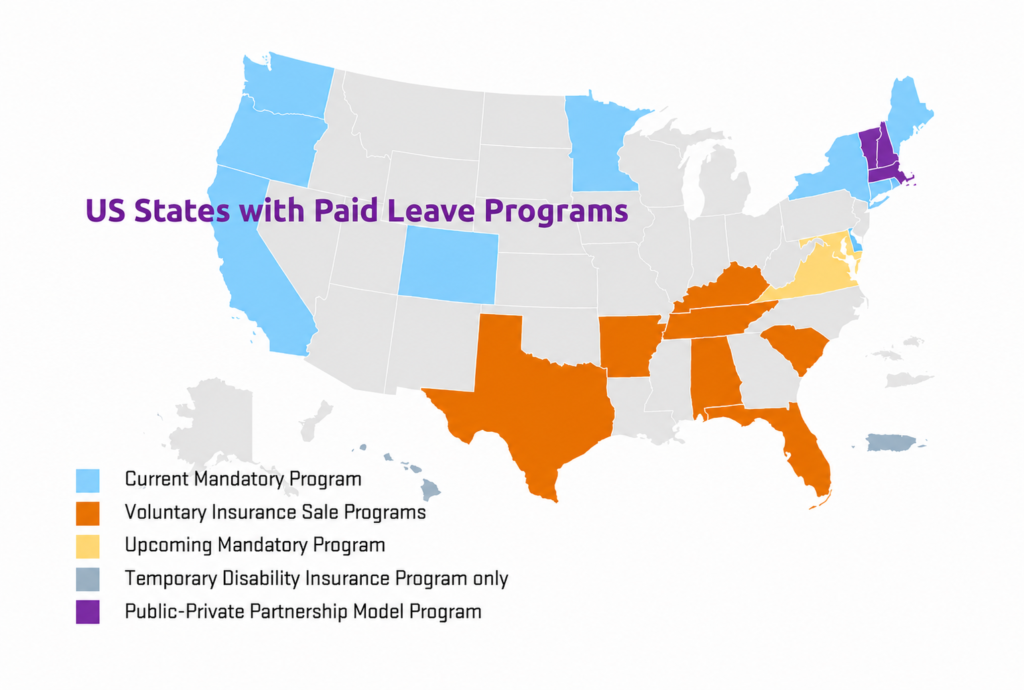
As employers expand their paid leave offerings and more states introduce PFML programs, many organizations find themselves managing programs across multiple systems, vendors, and stakeholders. What starts as an employee benefit quickly becomes an operational challenge involving HR, payroll, leave administrators, insurance carriers, finance teams, and compliance leaders.
Answering even seemingly simple questions about an individual employee’s single leave event soon runs into time-consuming workloads and potential pitfalls — underlining the need for better connected benefits data!
_______________________
HCMs Tell Only Part of the Story
Configuring HCMs for employee benefits and activating specific plan details can be a challenge.
Every HCM treats leave differently, and even within a single system leave codes, workflows, and reporting structures can easily be configured in a variety of ways. One employer’s parental leave may be another employer’s care-giving leave code. State PFML benefits may be tracked separately, inconsistently, or not at all.
The added challenge is that HCMs typically reflect how PFML is viewed internally. What easily gets missed out is how PFML policies ultimately get externally approved, paid, offset, and coordinated with other benefits.
_______________________
The Carrier Sees a Different Reality
Claim approvals, benefit payments, disability determinations, state leave coordination, wage replacement amounts, and return-to-work dates can all live outside the view of an employer’s HCM system.
Carriers often have this information that employers don’t. But carrier data is also incomplete.
Carrier records do not always align with payroll records. Claim dates may not match leave dates. Benefit payments may not match payroll periods. State leave interactions can create yet another layer of complexity.
_______________________
The Real Challenge: Connecting the Data
PFML administration not only needs access to all the required data.
It needs connected data!
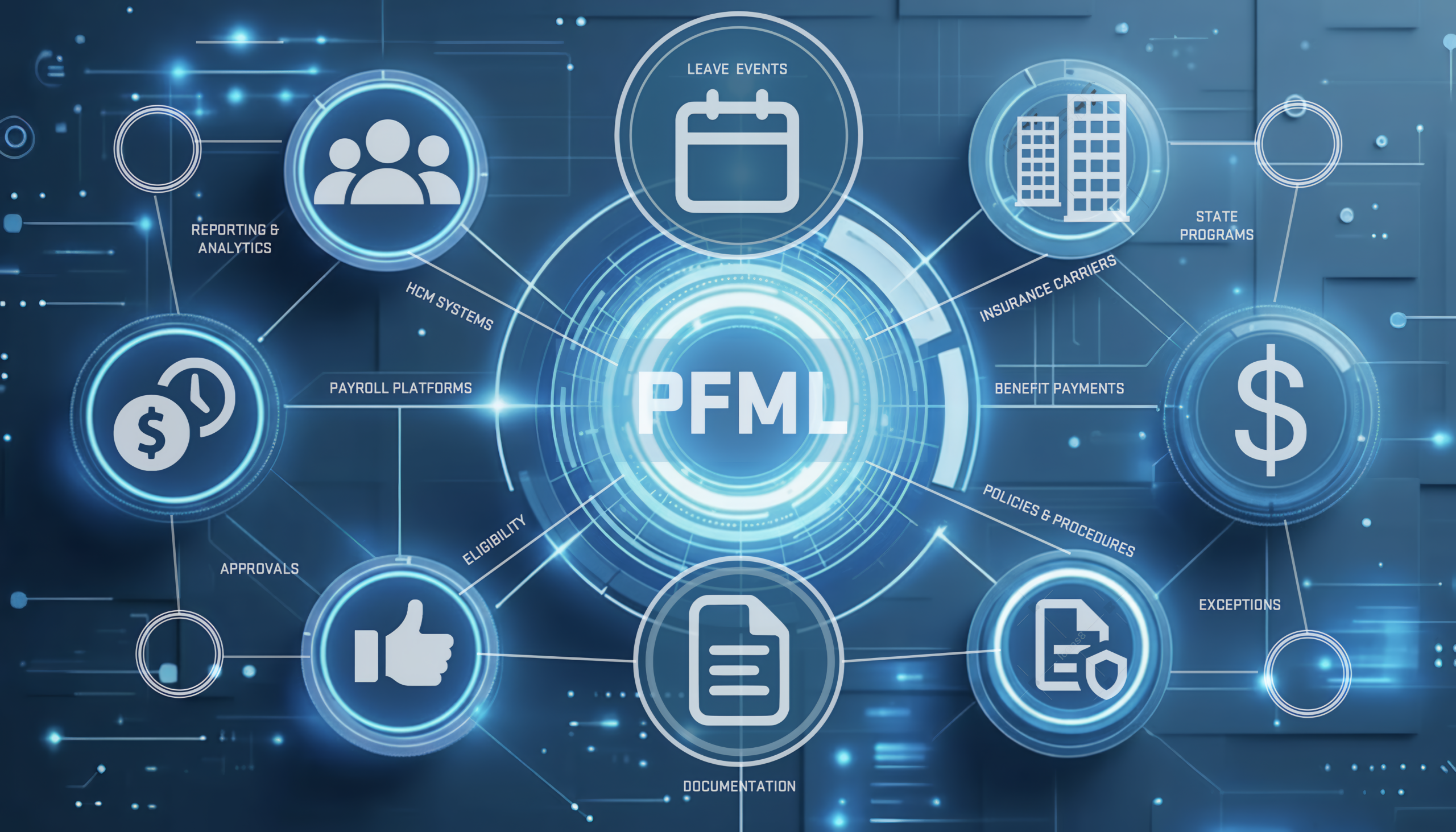
To truly understand a leave event, employers will often need information from:
• HCM systems
• Payroll platforms
• Leave administrators
• Insurance carriers
• State programs
• Internal policies
Each source and system tells part of the story. None the entire story.
_______________________
Why Connected Data Matters
In the past, employers had a narrow ben admin lens on managing paid leave. Not organizations expect far greater governance and understanding of the value and performance of PFML benefits — including:
• The true cost of PFML programs
• Employee utilization trends
• State program interactions
• Insurance funding effectiveness
• Opportunities such as Section 45S tax credits
This kind of governance demands more than an array of different data reports. Employers need a way to connect employee eligibility, leave events, payroll records, carrier data, state program interactions, and supporting documentation into a single data management framework and defensible record — an orchestrated benefits ecosystem.
The employer’s challenge is no longer just about leave administration. PFML has become a far greater governance issue, demanding not only better business insights but robust, reconciled, and auditable end-to-end data.
_______________________
The BeneSphere™ Solution — powered by BENEFITSCAPE
The BeneSphere benefits execution platform combines next gen integration technology, deep benefits expertise, carrier-specific operational knowledge, and deep HCM experience into a single framework for benefits delivery & strategic stewardship.
By orchestrating end-to-end PFML data, BeneSphere serves as a game-changing, system-agnostic truth layer for Governance, Risk, and Compliance (GRC). Slow, high-risk, and costly manual reconciliation is replaced by a fast, accurate, and agile benefits ecosystem for enhanced visibility, confidence, and compliance readiness.
_______________________
To transform your organization’s PFML governance, contact BENEFITSCAPE today by emailing info@benefitscape.com or calling +1 508-655-3307, or use the contact form on benefitscape.com.
You can learn more about BeneSphere here »