What HCM & Payroll Teams Need to Know.
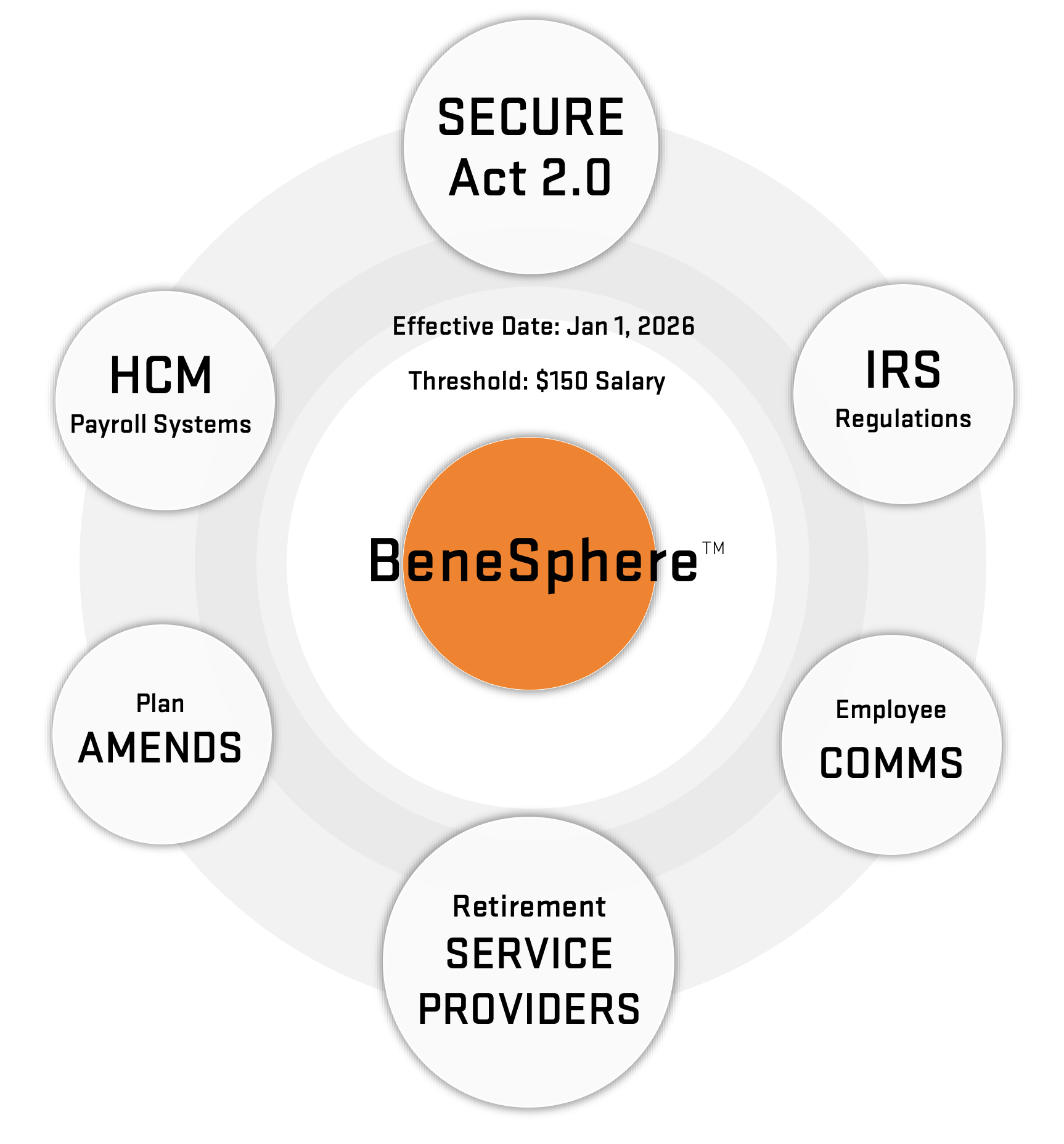
The SECURE Act 2.0 continues to reshape the retirement landscape, and one of the most significant updates — the new Roth Catch-Up Rules for higher-earning employees — takes effect on January 1, 2026. Although the IRS has provided transition relief, organizations should not wait. Ensuring compliance requires early planning, clear communication, and tight coordination across Human Capital Management (HCM), Payroll, and retirement plan partners.
To support employers and service providers navigating these changes, we’ve prepared a Roth Catch-Up Compliance Checklist (attached here). This practical guide helps HR, Payroll, and Benefits teams organize and operationalize the requirements.
Below is a summary of the five major areas of change organizations must address:
1. Identify Impacted Employees
Employees with prior-year wages above $145,000 (indexed) must have their catch-up contributions designated as Roth.
2. Coordinate with Your Retirement Record Keeper
Plan providers must support Roth catch-up contributions and updated tax treatment.
3. Update Payroll Systems
Payroll must be configured to distinguish Roth catch-up from pre-tax, apply proper taxation, and integrate smoothly with the record keeper.
4. Strengthen Employee Communication
High earners need advance communication about the new rules—especially those accustomed to pre-tax catch-up deferrals.
5. Monitor Compliance and Implementation Timelines
The 2026 enforcement date may seem distant, but process redesign, testing, and communication take time.
Why Strong Coordination Matters
These changes affect multiple systems and stakeholders — HCM configuration, Payroll taxation, retirement plan feeds, plan documentation, and employee education. Without a coordinated approach, organizations run the risk of incorrect payroll deductions, file rejections, plan compliance issues, and employee confusion.
This is where BENEFITSCAPE can help.
With deep expertise in benefits administration, HCM configuration, payroll integrations, and regulatory compliance, BENEFITSCAPE partners with organizations to streamline processes, update systems, and ensure compliance with evolving IRS regulations. Whether you need strategic guidance, technical assistance, or hands-on execution, we’re ready to support a smooth and penalty-free transition.